Thursday, 15 May 2014

The Tale of a Bill Gibb Dress

‘Be a latter day Infanta, in charted gold satin… be a frill…’ British Vogue, October 1st 1971
I have spent the past few months rifling through hundreds of beautiful clothes held in the Leeds Discovery Centre (and all under the watchful eye of a taxidermy chimpanzee!) From 17th Century undergarments to Burberry trench-coats it is a treasure trove of textiles that contains three centuries worth of classic pieces.

After sorting around 300 garments into chronological order I came across one of the most bizarre dresses I have ever seen. Dated 1976, full length, gold, black, red, and covered in print, applique and embroidery I thought had been labelled wrongly as its style was at odds with the low cut, puffy sleeved, brown and yellow dresses that made up the rest of the cupboard.


Dress designed by Bill Gibb for his 1976/1977 Winter collection

The dress was labelled Bill Gibb and I had to find out more about it.It is in fact, not a dress, but an ensemble made up of a skirt, tabard, and kaftan. The eclectic and contrasting layers make it a completely unique piece, and almost like a Sari. The kaftan has a large bee printed on it, as the bee was a marker of Gibb’s work, and often appeared on the buttons of his dresses. 

Alongside the bee are multi-coloured pansies printed underneath a layer of sheer sequins. The dress was created for Bill Gibb’s 1976/1977 Winter collection and was first shown in the spring on that year. It was previously displayed at Lotherton Hall (which is currently developing an exciting new area dedicated to its fashion and textile collection) and is stained with lipstick and makeup from its debut catwalk show, which I believe adds more character.

Who was Bill Gibb?

Bill Gibb was from Fraserburgh, Scotland. At an early age he showed a great aptitude for art and was encouraged to study it by his teachers. He later moved to London, where he studied at Saint Martins and finished first in his class, and after graduating he was taught by Janey Ironside at the Royal College of Art. 

He designed clothes for Baccarat, and in 1970 one of his designs for Baccarat was named dress of the year by British Vogue. There was even a room dedicated solely to his work in Harrods department store. After establishing his own brand Bill Gibb Ltd in 1972 alongside his partner Kaffe Fassett and business partner Kate Franklin his work became eponymous with the British Boutique Movement, which also included designers such as Ossie Clark and Jean Muir. 

Although the Pre-Raphaelite and Bohemian styles were popular with other designers of the seventies his work stood out due to his Eastern and Celtic influences, and outlandish prints. In 1971 he dressed Twiggy for the premiere of Ken Russell’s film The Boyfriend, which soared him to fame. His designs were also very popular with Bianca Jagger and Elizabeth Taylor. In 1974 he launched a knitwear collection, and in 1975 opened up a shop.

Unfortunately his company was in financial ruin and he is now one of the less referenced designers of the time due to his untimely death in 1988. Only three retrospectives have been held of his work. The first was ‘The Golden Boy of British Fashion’ at the Aberdeen Art Gallery and Museum (which holds the largest collection of his work in the world) in 2003, and the second and third in 2009 at ‘Bill Gibb- A Personal Journey’ at the Costume Museum in Bath and ‘Billy: Bill Gibb’s Moment in Time’ at the Fashion and Textile Museum in London. 

However, his legacy lives on as his clothes have inspired the works of contemporary designers such as John Galliano and Giles Deacon.

By Billie McKenzie, Dress and Textiles Intern


Friday, 9 May 2014

#EdibleMasterpieces - Rockingham Poodle

In another Collections through Cake installment, this time we are joing up with The Art Fund's national fund-raising endeavour #EdibleMasterpieces.

One of the amazing roles that the Art Fund has is to help museums and galleries buy art. Recent Leeds Museums & Galleries aquisitions that have been supported by the Art Fund can be found here. They include the West Yorkshire Hoard, 'A Dead Linnet' by John Atkinson Grimshaw and many other wonderful artworks.

Here in Leeds, we have a collection of Decorative Art that has been designated as a collection of national importance. To highlight it and the collections that are held at Temple Newsam and Lotherton Hall, we put together a Facebook album from which people could vote for an Art Fund donated Masterpiece to become Edible from! Choices included the Queen Anne State Bed, a Chippendale desk, but the winner was a Rockingham Pottery Poodle.

The Rockingham Pottery produced this ceramic in about 1830 - this was close to the end of what was called the 'red-mark' period of Rockingham ceramic production. (The other is the 'puce-mark period' from 1831-42.) These names reflect the colour of the stamp on the piece.  

Projects Curator Lucy got to make the bake!

Our lovely poodle (and puppies) is made out of raspberry buttermilk sponge, with coconut buttercream sandwiching the layers. The shaggy coat is made from marshmallow, with glittery sprinkles and a bit more coconut. A hand-sculpted face completes the masterpiece. Expressions are all the poodle’s own.

Interestingly, Rockingham got the effect for the poodle's coat by attaching very small pieces of ceramic one at a time to create a ruffled effect. Lucy used marshmallow and dessicated coconut to achieve the same ends.

Lucy says: I made the bake the evening before, then this morning sandwiched the layers and ‘iced’ the cake. I had a surprise as marshmallow is not perhaps the best medium to create a poodle’s ceramic coat from - it's sticky – there were a few moments where I thought “this isn’t working”!


Monday, 5 May 2014

Collections through Cake: The Hedgehog


At Leeds Museums & Galleries, there is a great collection of taxidermy. One of our Site Development Officer Gemma’s favourite objects is this lovely hedgehog.

As it happens, this week is National Hedgehog Awareness Week. To honour hedgehogginess in general, Gemma caked (pun intended) ours in chocolate and buttons for spines.

Hedgehogs have been decline across the British Isles, due to a number of factors, including road deaths and death by invertebrates that have consumed slug pellets. 

Other things to note about hedgehogs:
- They are lactose intolerant – so don’t give them any saucers of milk.
- The spines are in fact modified hairs and grow to be 2.5 cm long.
- Hedgehogs have around 5000 spines, but each individual spine only lasts about a year.
- A baby hedgehog is called a hoglet, but they have also been called pups, kits and piglets!
- Adder venom has no effect on hedgehogs.
- Hedgehogs were ‘domesticated’ by Romans, who used them for quills and for meat.

The collective noun for hedgehogs is an ‘array’. At Leeds Museums & Galleries we have an array of nine European hedgehogs in our collections, including two skulls and one mounted in a 'defensive ball' position. 

By Curator Lucy Moore
@CuratorLucy


Saturday, 26 April 2014

Collections through Cake: Butterfly Taxonomy


Rebecca, one of our awesome Curators of Natural Science, is on maternity leave. Just because you have small people, d​oesn’t mean you are excused from #MusCake duty! She made this fantastic offering of taxonomic butterfly cakes:

Taxonomy is the practice and science of the classification of things or concepts. Biological classification is based on characteristics derived from shared descent from common ancestors.

As the definitions imply, taxonomy can be something quite hard to explain, yet is fundamental to how we understand our world. Rebecca handily used cake as a medium to clear it all up! 


Some explanation: Latin is the language of Science, all new animals are given a Latin name which describes their characteristics. This is called binominal nomenclature. The name shows the genus and the species i.e. we are Homo sapiens (of the genus homo and the species sapiens). All these cakes are Laganum* (genus=cake) papilio (species=butterfly).
  
The eagle-eyed will have noticed that these Laganum papilio are all different. On the left we have the subspecies vanilla and cocoa (we enter trinominal nomenclature now!) – they are the same, but different. For example, the Amur tiger is Panther tigris altaica, whereas the Sumatran Tiger is Panther tigris sumatrae – both tigers, but of different subspecies, in this case due to their geography.

But what would happen if Laganum papilio vanilla had little caterpillars with Laganum papilio cocoa? Because they are subspecies, they are able to breed, and so we move to the cakes on the right. Here the X shows that they are hybrids! So Laganum papilio vanilla X L. p. cocoa is a mix of characteristics between a vanilla butterfly cake and a chocolate one.
  
*As it is a name, the first letter is capitalised. It is also traditional for taxonomic names to be written in italics.

By Curator Lucy Moore


Tuesday, 22 April 2014

A mountain of bird eggs: Unpacking the collection

I dedicated much of my year as a Biology Curatorial Trainee working on the bird egg collection at Leeds Museum Discovery Centre after it had been left packed up following the move from the old store. You can read an introduction to this project in my previous post. My first task was to unpack the specimens to improve their storage and see what we had.

A lot of the eggs had been removed from cabinet drawers and individually bagged up and put in cardboard boxes. I also discovered recently bagged up specimens still in their original makeshift containers, such as shoe boxes, cocoa boxes and cigar cases, including one with late 19th century newspaper as padding (see image). 

Removing them from these tight confines dramatically improved the storage of these specimens and reduced the risk of damage. There were also specimens that hadn’t yet been removed from partitioned cabinet drawers, often lined with deteriorating, highly acidic (sometimes pink) cotton wool. I individually bagged up these specimens so they were no longer in contact with the acidic lining and could be separated out when later rearranging the collection. I kept any data with the newly bagged specimens. 

Some specimens didn’t need unpacking as they were stored in individual glass-topped boxes, which offered the best possible storage for the collection. The specimens were laid into the drawers within the racking (see right).

As I unpacked these boxes and drawers, I stumbled across lots more boxes of specimens that I knew would require a bit more work. It was at this point that I realised what I had let myself in for and was glad I enjoyed pair matching games. The boxes contained large poly bags each filled with an assortment of eggs. I could tell by collector marks on the eggs that some of them belonged together.

I spent many days matching up specimens (see left) including some that had been in separate bags and could well have been stored separately for years. These specimens were also laid into the drawers.

I really enjoyed the unpacking phase, even when having to match up mountains of mixed eggs. It was actually quite therapeutic and satisfying being able to unite specimens and reinstate clutches of eggs. 


Being the first person to look over the collection as a whole was quite a privilege. I got to see all of the great specimens we have including the largest egg, from an elephant bird, to eggs from endangered and extinct species, such as the Passenger Pigeon. I was also able to uncover the quirky specimens and reveal for the first time the unique stories behind them.

By Kirsty Garrod, Biology Curatorial Trainee


Sunday, 20 April 2014

Collections through Cake: Axe Hammer Heads


Kat, Curator of Archaeology, recently made these fantastic axe hammer cakes for our #MusCake escapades. They were dark chocolate and orange – as you’ll see, basically interpreting the Bronze Age through the medium of the Jaffa Cake.

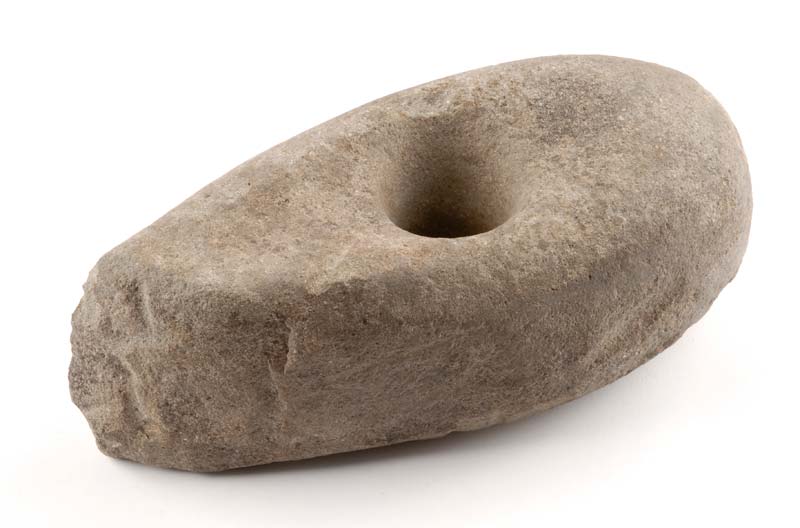
The axe hammers that Kat modelled her cakes on date from the Bronze Age (2500-1500 BC). The example below comes from Wike, near Leeds. The axe hammer head is teardrop shaped and is made from sandstone.


What is amazing, is that we just don’t know if the term ‘axe hammer head’ is even correct. Some studies have shown that if the hole was used as a socket for a handle, the head would still be too heavy to be lifted and swung. They may have been used as a steadying tool for holding something in position.

More recent interpretations suggest that they might have had a ritual use. I (personally) like the idea of the hole being an area that you might look through! It’s all about interpretation… 


Another example from our collections (see right) was found near Morley, purely by chance! It’s on display in the Leeds Story Gallery at Leeds City Museum.

Keep your eyes peeled – you don’t know what you might find!

By Curator Lucy Moore